Pi515 AI Challenge
About The Pi515 AI Challenge: The Iowa Social Impact Big Data Quest
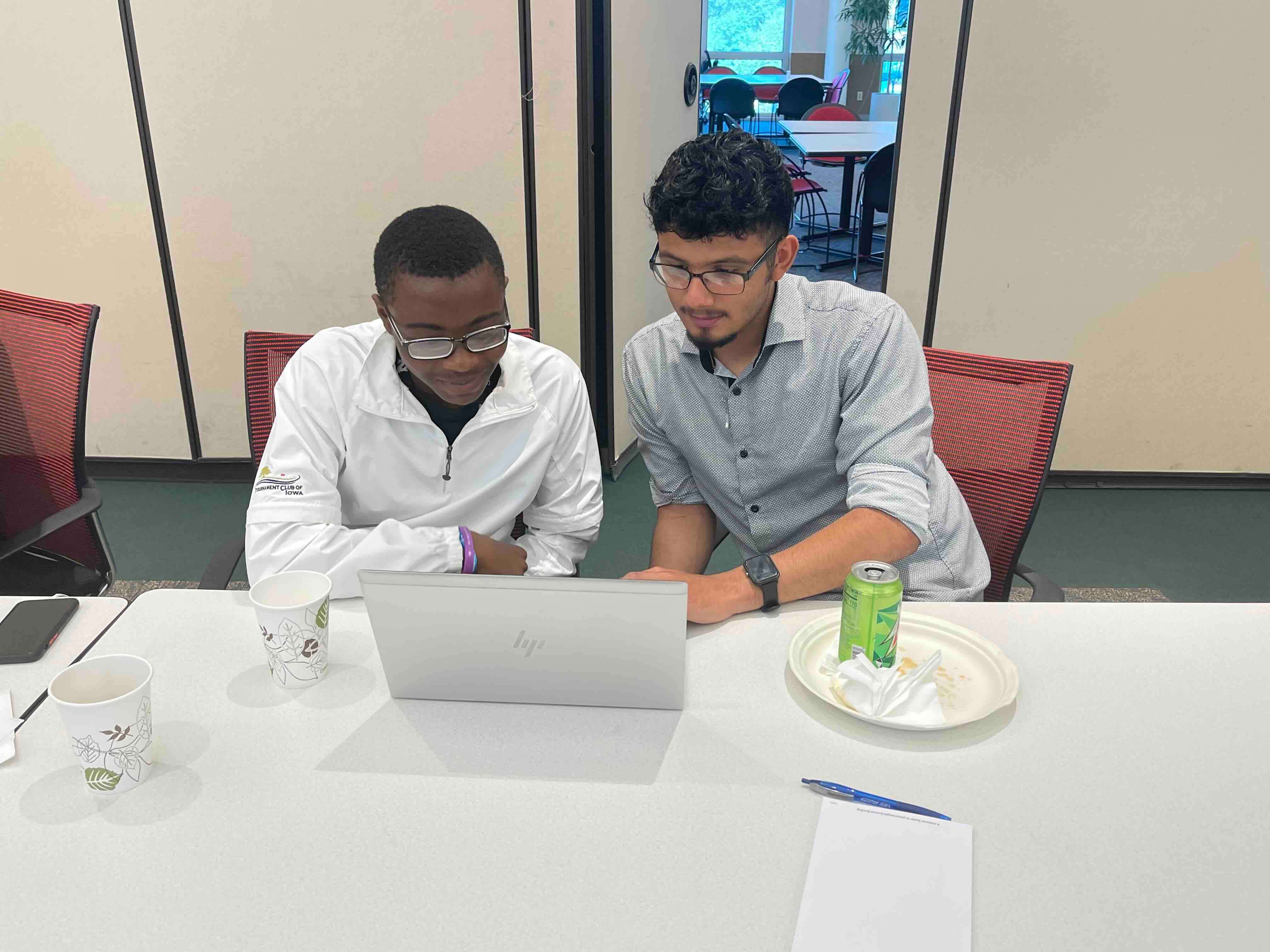
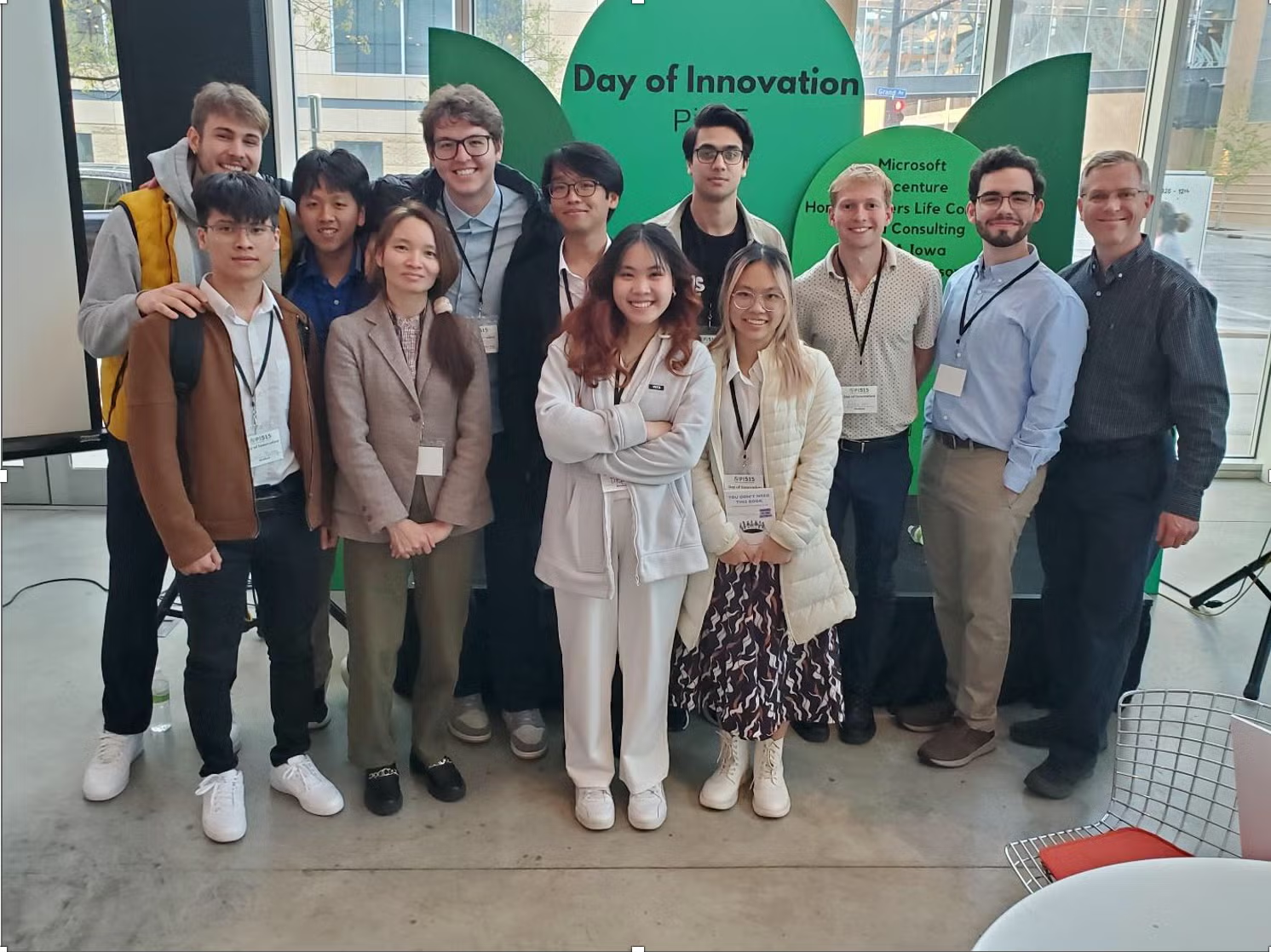
The AI Challenge, a 3-month program, invites college students to build AI solutions for Iowa’s most pressing issues. Teams of 3-5 students attend six expert-led workshops, then design a working AI solution with support from an industry mentor. Finalists pitch their idea at the Pi515 Day of Innovation for the chance to win a share of $10,000.
The state of Iowa is known for its rich educational institutions and the immense potential of its college students. As the world delves deeper into the era of big data and Multimodal AI, it's essential to harness these technologies for social good. This challenge aims to bring together the brightest minds from Iowa's colleges to tackle pressing societal issues using big data and Multimodal AI.
Winning 1st place in the Pi515 [AI Challenge] was a defining moment for me. It pushed me beyond coding into innovation, pitching ideas, and understanding the intersection of technology, creativity, and impact.
Umesh Sai Teja Poola | 2025 AI Challenge Participant
Who Can Join?
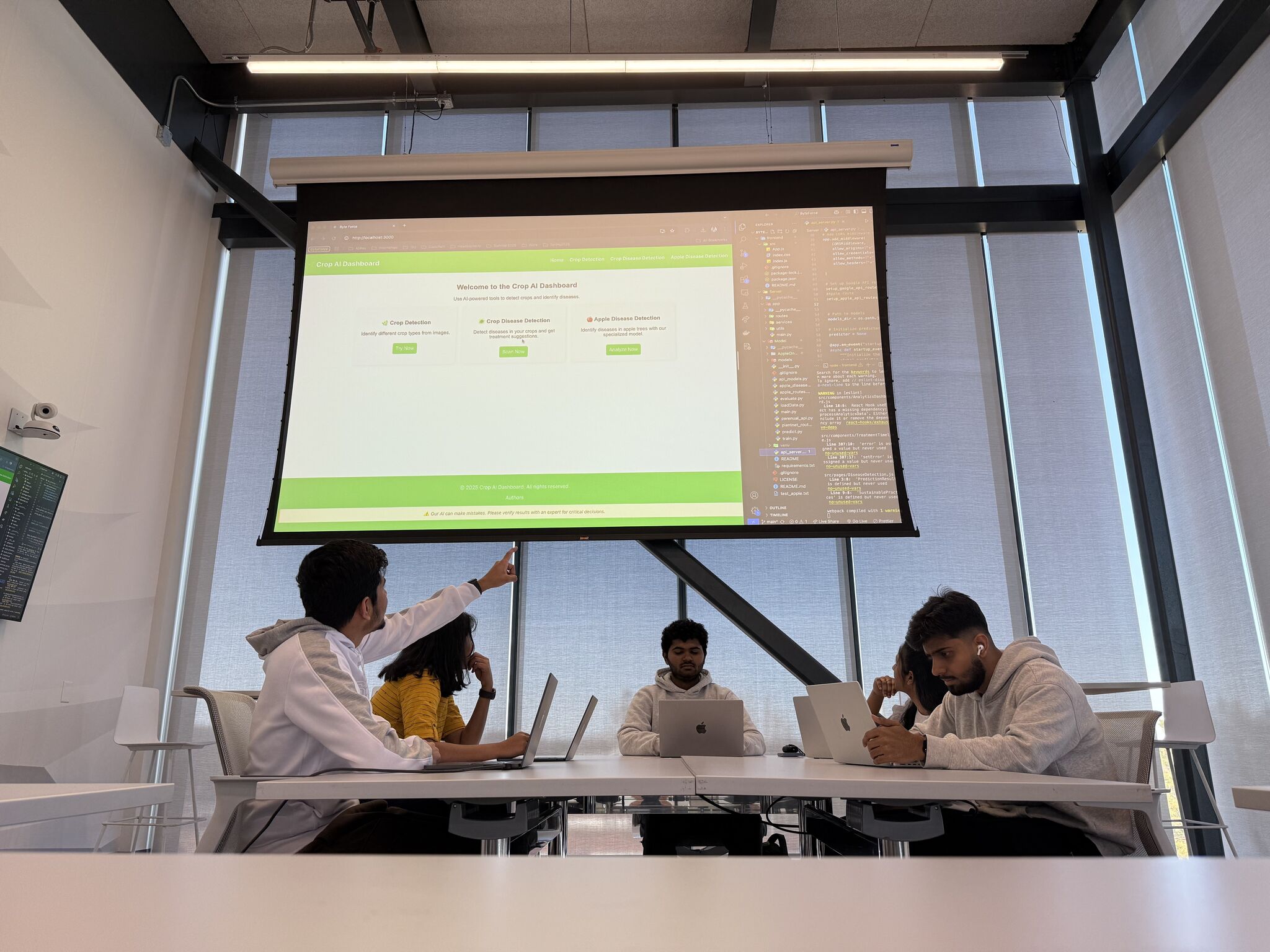
This challenge is open to any full-time students in Iowa ages 18-24. No coding or technical knowledge necessary. To enter the AI Challenge, select a track, assemble a team of 3-5 students, and fill out the form below. We will provide you with more details on the challenge such as project timeline, requirements, materials and more.
Objective
Develop an AI solution that leverages big data to address a social issue relevant to the Iowa community by choosing one of the tracks below. Solutions should be innovative, scalable, and have a tangible positive impact.
Past AI Challenge Tracks:
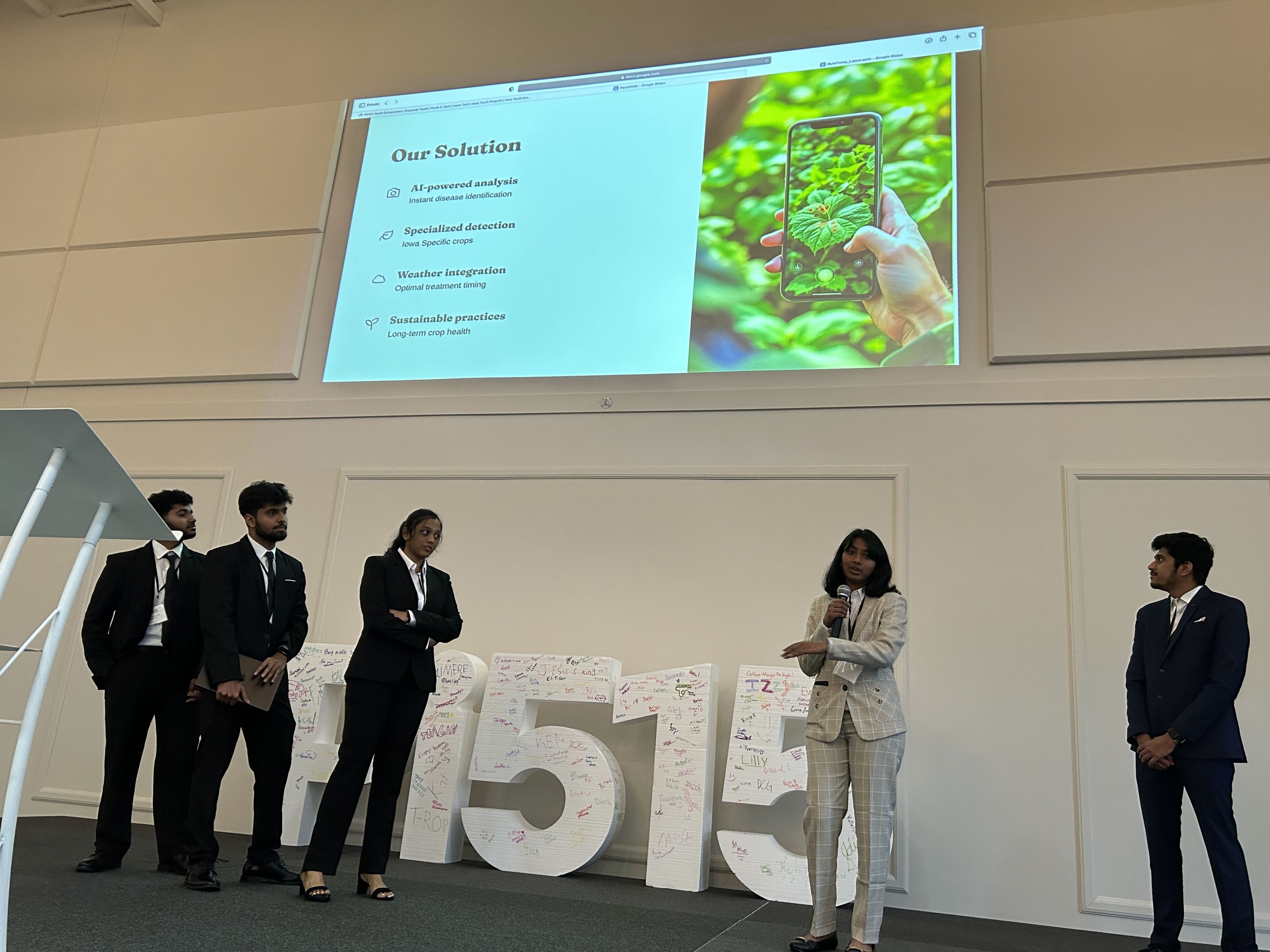
Track 1: Cultivating Sustainable Practices in Agriculture
Objective: Iowa’s agriculture sector faces mounting pressures from unpredictable weather patterns, soil degradation, water quality concerns, and the need to increase efficiency while reducing environmental impact. Explore how you may use AI-enabled solutions to address one of the following key areas within this sector:
• Livestock (e.g. monitoring and improving animal health...)
• Crops (e.g. monitoring and improving crop health...)
• Farm operations
• Water and soil use
• Labor (e.g. the next farm workforce...)
Track 2: Building Fair and Resilient Financial Futures
Objective: Iowa’s financial ecosystem faces challenges around financial literacy, access to credit for rural and underserved communities, and protecting consumers from fraud in an increasingly digital-first economy. Explore how you may use AI-enabled solutions to address one of the following key areas within this sector:
• Financial literacy
• Fair financial assessments for small farms and businesses
• Detecting fraud and scams
• Helping students and families budget and save
Track 3: Driving Innovation with EdTech
Objective: Education in Iowa is challenged by disparities in learning outcomes, teacher shortages, and the need to prepare students for a digital economy while ensuring equitable access to quality instruction. Explore how you may use AI-enabled solutions to address one of the following key areas within this sector:
• Personalized learning support for students
• Tools that ease teacher workload
• Accessibility for diverse learners
• Early warnings when students need extra help
Track 4: Enhancing Cybersecurity and Privacy
Objective: As Iowa’s economy and public services become more digitized, individuals and organizations face increasing risks from cyberattacks, data breaches, and privacy erosion. Explore how you may use AI-enabled solutions to address one of the following key areas within this sector:
• Safer logins and ID checks
• Stopping scams across email, text, or calls
• Protecting privacy while sharing data
• Fun, engaging cybersecurity training
Challenge Details
Team Composition:
• Students ages 18-24 can apply in teams of 3-5.
• We are encouraging interdisciplinary participation – students from backgrounds in not only STEM fields, but also the social sciences and humanities are welcome to participate.
• Individuals may apply to participate in the challenge without being part of a team and will be placed with a team by competition organizers.
• You should expect that much of your collaboration will be virtual
Data Sets:
Participating teams must share the data sources they use, and may also create their own data sets. Data sets may be created using qualitative or quantitative methods, but teams...
• must share the data set,
• share the methods they’ve used to create the data (if applicable),
• and ensure all personally identifiable information is redacted (we strongly advise that you do not collect it). This means that for any datum which is created, an independent user of that datum must not be able to ascertain who the data is specifically about.
• A starting point for data sets that can be useful for the challenge is located here.
Multimodal AI:
Solutions should utilize multiple AI modals. This could mean combining Natural Language Processing (NLP) to understand textual data, Computer Vision for image data, and Predictive Analytics for trend forecasting, among others. Example, a model that produces classifiers for flood warnings based on both aerial photographs of and geodata.
Project Example:
https://www.microsoft.com/en-us/ai/ai-lab-projects
1st Prize: $5,000
2nd Prize: $3,000
3rd Prize: $2,000
Frequently Asked Questions
Get Involved and Help This Program Grow
Our programs thrive because of support from our community and the volunteers that show up every day to make an impact.